



A self-driving car can move one passenger along a road. The larger change comes when the vehicle, the road, and the service around it work without a person inside the car.
Quick read
- Robotaxis remove the driver from a trip, but still depend on mapped roads and remote support.
- Package robots and drones move goods instead of people.
- The hard problem moves beyond steering to safety, access, cost, and public trust.
The car becomes one part of the system
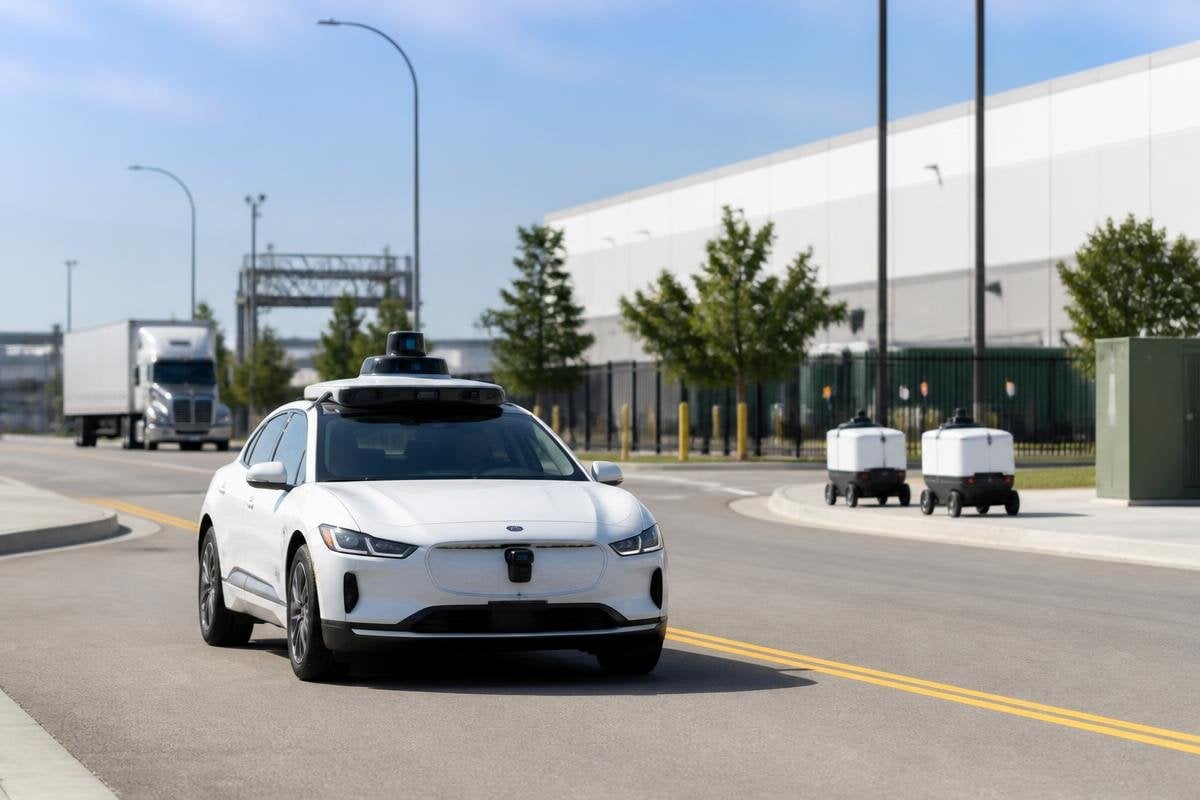
A self-driving car uses cameras, radar, LiDAR, maps, and onboard software to read its surroundings and choose a path. That makes the vehicle an autonomous system: it senses the road, makes driving decisions, and controls the steering, brakes, and motor.
The next step is broader control of a trip. A passenger may request a ride, walk to a safe pickup point, enter the vehicle, and leave at a marked drop-off area without speaking to an onboard operator.
The service still needs people and software to handle unusual road layouts, blocked lanes, damaged sensors, and passengers who need help. That changes the business question.
A company must pay for the vehicle, charging, cleaning, repairs, customer support, mapping, and remote assistance. Removing the onboard operator cuts one cost, but it adds other work around the car.
Goods may move before people do
Autonomous package robots face a narrower task than passenger cars. A small robot can stay on a pavement or private site, carry a package, and stop when a person or obstacle blocks its route. A drone can travel above roads, though its flight area, payload, battery, and landing point limit the job.
These systems suit short trips where a worker spends much of the time walking or operating a vehicle between stops. They also need a handoff process. A customer may need to enter a code, open a compartment, or meet the robot at a set location.
The machine does the travel. People still manage the exceptions.
A self-driving car still depends on road signs, lane markings, maps, and signals it can read. Robot 24 can help you follow the machines and road systems behind that change, so the next question is how roads will send information back to cars. Transport automation will be judged by those handoffs, not by a car moving alone on a test route.
Roads will need to talk back
A self-driving vehicle can make decisions from onboard sensors, but roads can give it more useful information. Signals, lane markings, construction notices, parking spaces, and loading zones all affect a vehicle’s path.
A connected road may send a warning about a closed lane before the car reaches it. A charging site may report an open bay. A pickup zone may tell a robotaxi where it can stop without blocking a bus or cycle lane.
This does not mean every road needs expensive new equipment. Clear markings, reliable signs, safe pickup areas, and shared data may matter more than a large hardware project. Cities will decide which changes fit their streets and budgets.
The limits are outside the sales demo
A clear-road trip is only one part of the job. A transport service must also work during heavy rain, road repairs, confusing temporary signs, crowded pickup areas, and sensor damage. It must protect people who walk, cycle, work, or wait near the vehicle.
The safety case needs records from normal trips and rare failures. Operators need to show how the vehicle detects a problem, stops safely, asks for help, and records what happened. A claim that the car operates without onboard control says little without the limits around that claim.
I’d wait for clear operating limits and public safety records before treating any autonomous transport service as ready for every road.
A practical test for the next system
Before you judge a new transport product, check these points:
- Task: Does it move people, parcels, or both?
- Route: Does it work on public roads, pavements, private sites, or fixed lanes?
- Fallback: Who takes over when the sensors or software cannot decide?
- Access: Can a person with limited mobility use the pickup, entry, and handoff steps?
- Cost: Does removing the onboard operator cover the added cost of charging, support, and repairs?
- Proof: Are the operating area, failure cases, and safety records public?
The next transport system may look less like one car replacing one onboard operator and more like several machines sharing a trip. The useful measure will be simple: where can it work, who can use it, and what happens when the road stops behaving normally?